
Accelerate innovation and entrepreneurship
inside your organization
inside your organization
Predictive Risk Intelligence
1. Why Responsible AI Could Redefine Governance, Risk and Customer Trust in Financial Services
Financial services have always been a business of managing uncertainty. Institutions continually ask fundamental questions such as;
- What could go wrong?
- How probable is it?
- What would the impact be?
- Are our controls adequate?
- Are we operating within risk appetite?
- What risks are emerging beyond the horizon?
For decades, Governance, Risk and Compliance functions have answered these questions through frameworks such as Risk and Control Self-Assessments (RCSA), Key Risk Indicators (KRIs), incident reporting, compliance monitoring, internal audits, risk registers and periodic management reporting. Whilst these mechanisms remain essential, Artificial Intelligence AI is now able to create opportunities to fundamentally enhance them, whereby the next evolution of GRC should be Predictive GRC rather than just Digital GRC.
What is Predictive GRC you might ask? Well, it starts with how artificial intelligence helps organisations identify patterns, correlations and emerging exposures before they develop into material events. The objective is not to replace professional judgement. It is to give professional judgement better intelligence from a risk management standpoint.


2. Mitigating Risk Management From A Rear-View Mirror To Forward Radar Approach.
POne of the limitations of conventional risk management is that much of the information used to understand risk describes events that have already occurred such as;
- An incident happens.
- A KRI breaches its threshold.
- An audit identifies a control weakness.
- A customer complains.
- A third party fails an SLA.
- A regulatory finding is issued.
Management then responds reactively, however, this is where AI creates the possibility of changing this sequence. AI within the enterprise risk intelligence environment is capable of secure analysis by weighing in RCSA results, KRIs, operational incidents, loss events, customer complaints, audit findings, cybersecurity events, third-party performance, regulatory developments, market indicators and historical trends.
AI-assisted analytics could identify correlations that conventional dashboards may not reveal. Instead of simply informing management that “operational risk increased during the previous quarter”, the risk function, by leveraging AI could provide a more comprehensive and granular response that would include which combination of indicators suggests that our probability of a material operational event is increasing. That would be a profoundly different reporting on risk where it represents the evolution from risk reporting to risk intelligence to predictive risk management.
3. AI Makes RCSA More Intelligent
RCSA remains one of the foundations of operational risk management. But RCSA can become overly dependent on periodic assessments and subjective judgement. AI could augment the process. Historical incidents, control failures, audit findings, complaints, operational losses and KRIs could be compared against current RCSA assessments.
The system might identify, for example, that a business unit has assessed a control as effective, yet associated incidents, audit findings and KRIs indicate deterioration. That does not mean AI should automatically override the control owner's assessment. It means Risk receives an intelligent challenge indicator.
The conversation then evolves to; “Your RCSA concludes that this control remains effective. However, multiple independent indicators suggest increasing residual risk. Should we reassess?” That is a far more mature application of AI than simply generating reports.

4. Dynamic KRIs Instead Of Static KRIs
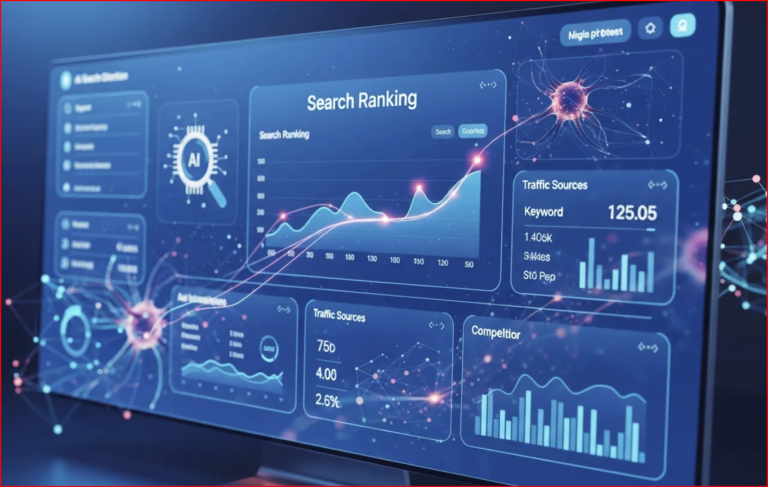
Many organisations continue to manage KRIs through predetermined thresholds. AI could enable dynamic KRI intelligence by analysing relationships between indicators. A cyber-risk KRI, employee-turnover KRI, vendor-performance KRI and operational-incident KRI may individually remain within tolerance. But collectively, their direction of travel may indicate increasing operational vulnerability.
Traditional dashboards may not identify the relationship, however, AI potentially can. This means future risk dashboards could incorporate Risk Velocity, Risk Direction, Emerging Correlations, Predicted Threshold Breach, Control Deterioration Indicator, and Management Attention Priority rather than just current Risk Levels. This should be the new CRO's dashboard, transforming it into more of an enterprise early-warning system.
Traditional dashboards may not identify the relationship, however, AI potentially can. This means future risk dashboards could incorporate Risk Velocity, Risk Direction, Emerging Correlations, Predicted Threshold Breach, Control Deterioration Indicator, and Management Attention Priority rather than just current Risk Levels. This should be the new CRO's dashboard, transforming it into more of an enterprise early-warning system.
5. AI Transforms Third-Party Risk
Modern financial institutions increasingly depend on interconnected ecosystems of cloud providers, technology vendors, payment processors, outsourced service providers, fintech partners, agents, data providers and critical infrastructure. Third-party risk is therefore increasingly an enterprise risk.
AI could continuously assist with analyzing vendor performance, SLA breaches, cybersecurity incidents, financial deterioration, concentration exposure, audit findings, contractual obligations, business continuity capabilities and external risk indicators. This would allow organisations to move from the typical Annual Vendor Assessment towards Continuous Third-Party Risk Intelligence. This is particularly valuable where one provider supports multiple critical business services.
AI could continuously assist with analyzing vendor performance, SLA breaches, cybersecurity incidents, financial deterioration, concentration exposure, audit findings, contractual obligations, business continuity capabilities and external risk indicators. This would allow organisations to move from the typical Annual Vendor Assessment towards Continuous Third-Party Risk Intelligence. This is particularly valuable where one provider supports multiple critical business services.
6. AI Can Strengthen Customer Protection
AI also provides significant opportunities for identifying customer risks earlier. Complaints, claims, service interactions, transaction behaviour and customer-support data can reveal patterns that conventional reporting may overlook. AI-assisted analysis can identify emerging conduct-risk themes, vulnerable-customer indicators, abnormal claims behaviour, potential fraud, recurring service failures and systemic customer-experience issues.
This creates an opportunity for Risk and Compliance functions to intervene earlier. But customer protection also demonstrates why AI requires strong governance. A customer must never become just an algorithmic probability.
Models affecting customers must therefore be governed for fairness, explainability, privacy, data quality, security, bias and appropriate human intervention.
7. AI Risk Appetite Belongs In The Boardroom
AI is not merely a technology issue. It can create Strategic Risk, Operational Risk, Model Risk, Conduct Risk, Regulatory Risk, Privacy Risk, Cyber Risk, Third-Party Risk, Reputational Risk and Legal Risk. AI governance ultimately belongs within enterprise governance. Boards and senior management should establish an explicit AI Risk Appetite.
It should answer questions such as;
- Which AI applications are acceptable?
- Which require enhanced governance?
- Which decisions may AI assist?
- Which decisions require mandatory human approval?
- What information may be processed by generative AI?
- What information must never leave controlled environments?
- How are third-party AI models assessed?
- How is algorithmic bias evaluated?
- What level of explainability is required?
- What constitutes an AI incident?
- Who has authority to suspend an AI application?
These are valid and prevalent governance questions and not just merely technology questions.

8. Human Accountability Must Remain Non-Negotiable
Perhaps the most important principle in Responsible AI is that even if Artificial intelligence may generate the insight, Human beings must retain accountability for decisions.
AI can detect, correlate, predict, recommend, but accountability for customers, regulatory obligations, risk acceptance and material business decisions must remain clearly assigned to authorised individuals and governance bodies. This is where Human-in-the-Loop governance becomes essential.
AI can detect, correlate, predict, recommend, but accountability for customers, regulatory obligations, risk acceptance and material business decisions must remain clearly assigned to authorised individuals and governance bodies. This is where Human-in-the-Loop governance becomes essential.
9. The Future CRO Will Govern Intelligence, Not Merely Risk
The role of the Chief Risk Officer is consequently likely to evolve. The CRO of tomorrow will still need a deep understanding of risk appetite, capital, operational risk, technology risk, third-party risk, resilience, regulation and governance. But increasingly, the CRO will also need to understand AI governance, model risk, data integrity, algorithmic decision-making, predictive analytics and the limitations of machine-generated intelligence.
The objective is not to transform CROs into data scientists but merely to ensure they can govern an organisation in which increasingly important decisions are influenced by intelligent systems.
The organisations that ultimately gain the greatest advantage from AI will therefore not necessarily be those with the most sophisticated algorithms, but rather they will be those capable of combining Artificial Intelligence and Human Judgement and Responsible Governance. That combination could transform Risk Management from the organisation's rear-view mirror into its forward radar.